What Happens to Your Princeton-Area Home in a Divorce?
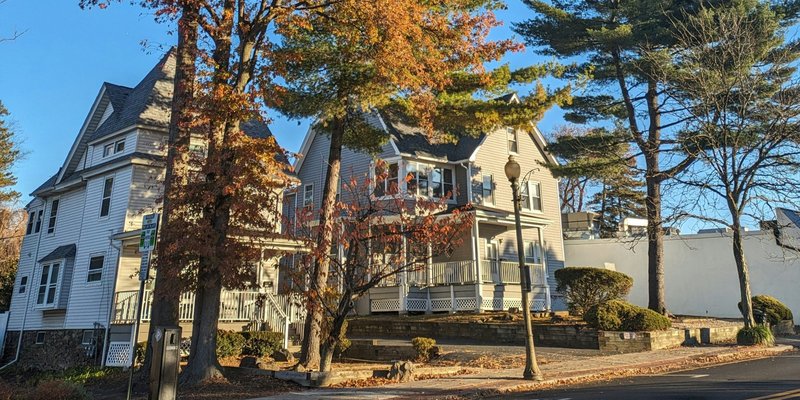
In New Jersey, the marital home is subject to equitable distribution, which means it gets divided fairly rather than automatically down the middle. You have three realistic paths: sell it and split the proceeds, have one spouse buy out the other, or keep it jointly for a set period and sell later. Transferring the house between spouses during divorce is tax free, but when you sell matters. A married couple filing jointly can exclude up to $500,000 of gain. A single filer gets $250,000.
In a market like Princeton, West Windsor, or Hopewell, that gap is not academic. Here is how the house actually gets handled.
Is the House Marital Property If Only One Name Is on the Deed?
Usually, yes. New Jersey looks at when and how the property was acquired, not whose name appears on the deed. A home bought during the marriage with marital income is marital property even if the deed lists one spouse.
Courts weigh the factors at N.J.S.A. 2A:34-23.1, including how long the marriage lasted, each spouse’s economic circumstances, contributions to acquiring the property, and the tax consequences of the split. Non-financial contributions count too, so a spouse who managed the household rather than the mortgage payments still has a claim.
What Are Your Three Options?
Sell and split. The cleanest break. You list the home, pay off the mortgage and selling costs, and divide what remains according to your agreement. No one stays financially tangled with an ex.
One spouse buys out the other. The spouse keeping the house pays the other for their share of the equity, usually through refinancing or by trading other assets such as retirement accounts.
Defer the sale. Both spouses stay on the deed for an agreed period, often until the youngest child finishes at a particular school, then sell and divide. This keeps children in the same district, which appeals to families in the West Windsor-Plainsboro and Princeton districts. It also keeps two ex-spouses financially linked, so the agreement needs to spell out who pays the mortgage, taxes, insurance, and repairs, and exactly what triggers the sale.
How Does a Buyout Work?
The math is straightforward. The complications are in the financing.
- Get a current appraisal. Not a Zillow estimate, and not the assessed value on your tax bill.
- Subtract what you owe. Appraised value minus the mortgage balance equals the equity.
- Divide the equity according to your agreement, which may or may not be 50/50.
- Fund the buyout, typically by refinancing the mortgage in one name or offsetting with other assets.
The refinance is where buyouts fall apart. The spouse keeping the house has to qualify for the new loan alone, on one income. In a high-value market, that is a real hurdle, and it is worth checking with a lender before you agree to keep the house rather than after.
Why a Deed Transfer Does Not Release You From the Mortgage
This is the single most expensive mistake people make about the marital home, so it is worth being precise.
The deed and the mortgage are separate documents. Signing a quitclaim deed transfers your ownership interest. It does nothing to your obligation on the loan. If your name is still on the mortgage:
- You remain fully liable to the lender
- Missed payments land on your credit report
- The debt counts against you when you apply for your next mortgage
Your divorce agreement cannot bind the lender. It can require your spouse to refinance, but until that refinance closes, you are still on the hook. Build a deadline into the agreement, plus a consequence if the refinance does not happen, such as the house going on the market.
How Do Capital Gains Taxes Affect the Timing?
Transferring property between spouses as part of a divorce is not a taxable event under IRC Section 1041. The tax question arrives at the sale.
Under IRS Topic 701, you can exclude up to $250,000 of gain on a main home, or up to $500,000 filing jointly. To qualify you generally need to have owned and lived in the home for at least two of the five years before the sale. For the joint $500,000 exclusion, both spouses must meet the use test individually, though only one needs to meet the ownership test.
Why that matters locally: a couple who bought in Princeton twenty years ago may be sitting on gain well above $250,000. Selling while still married and filing jointly can shelter twice as much as selling afterward. If one spouse keeps the house and sells in five years, they may also fail the two-year use test by then. Deciding when to sell is a tax decision, not only an emotional one.
What If You Owned the Home Before the Marriage?
A home you owned before marrying generally starts as separate property. That protection erodes in common ways:
- Marital income paid the mortgage, taxes, or insurance
- You added your spouse to the deed
- Marital funds paid for a renovation or addition
- The home appreciated while both spouses maintained it
Your spouse may have a claim to part of the increase in value even when the original property stays separate. Records showing what you owned at the wedding and what was paid from where make the difference.
Frequently Asked Questions
Can my spouse force me to sell the house?
A court can order a sale if that is the fair way to divide the equity, particularly when neither spouse can afford the home alone. Many couples agree to sell instead.
Who pays the mortgage during the divorce?
Whatever you agree, or what the court orders on a temporary basis. Keep paying until something is decided, since missed payments hurt both spouses’ credit.
Does keeping the house mean giving up my retirement account?
Often, yes. Equity in a home is commonly offset against retirement assets. Compare after-tax values, because a dollar of home equity and a dollar in a 401(k) are not the same dollar.
What happens to the property taxes?
Whoever owns the home after the divorce owes them. With Mercer County property taxes what they are, factor the full monthly carrying cost into whether keeping the house is affordable.
Do we need an appraisal?
For a buyout, yes. A formal appraisal protects both spouses and prevents a dispute over what the home is worth.
Deciding What to Do With the House
The house is usually the largest asset and the one with the most feeling attached. Run the numbers before you decide: get a real appraisal, confirm with a lender whether you can refinance alone, and look at the tax effect of selling now versus later.
Netsquire works out of Princeton and helps Mercer County couples divide real estate without a courtroom battle. Book a free Discovery Call and we will walk through your options.
About the Author

John Nachlinger is a co-founder and managing attorney of Netsquire, a family law firm focused on streamlining divorces through effective mediation, settlement drafting, and court filing assistance. As a New Jersey Qualified Mediator, John guides couples toward equitable agreements without the cost and stress of litigation.
Recognized as a New Jersey Super Lawyer for over a decade, John’s client-focused approach aims to foster understanding during challenging transitions. With a background spanning top law journals, judicial clerkships, and boutique family law firms, John now applies his analytical skills to create workable solutions for all parties. His mediation services reshape the divorce journey by prioritizing compassion and compromise.